|
June 25-July 1
|
|

|
25 June 2001, 1pm I have been on the move since 5:30 this morning, and I am now on the final leg of my train voyages for today, having changed trains in Edinburgh and Glasgow. When I arrived in Edinburgh, I had only a few minutes to get my BritRail pass validated and find my train to Glasgow. Thank God, there was no line at the ticket booth, the platform for the Glasgow train was nearby, and a passing Scotsman in a suit gave me direction (unsolicited) when I got confused. It all happened with such perfect timing that I wondered if the Scotsman might have been an angel. However God arranged it, He did, and to Him is again due glory. The Scottish countryside is utterly gorgeous, as is the English. I think that Scotland wins for beauty here, though. On the trip north to Edinburgh, I could see Lindisfarne from the window of the train, and I smiled. One thing I have noticed about travelling alone is that I am forced to be more silent -- it is a welcome respite from my usual highly loquacious lifestyle. Of course, in some fashion my silence is broken a little with this journal. Still, I do thank God for the quiet. |
|
|
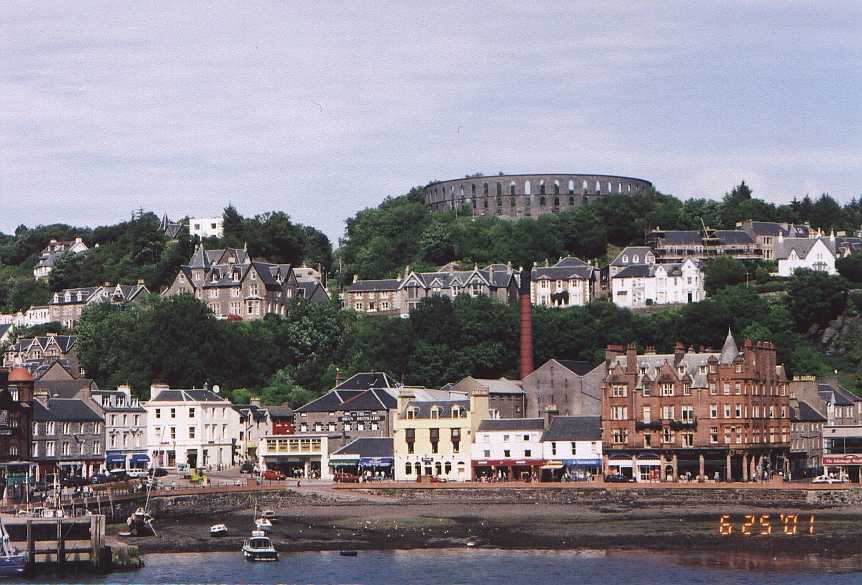
25 June 2001, 7:30pm When I arrived in Oban, I immediately took the ferry to Mull, a trip which lasted nearly an hour. Coming directly off the boat, I boarded a bus which took me from the village of Craignure to Fionnphort, another hour's journey. Along the way was some of the most breathtaking scenery I've ever seen. Upon arrival in this tiny village, I began looking for a place to stay. I nearly despaired of finding anything, but finally one of the many Bed-and-Breakfast owners with no vacancies directed me to one which did have a vacancy. The owners of Abbey View welcomed me in, and then I went down to the one pub in the village, the Keel Row, and had a hearty meal. |
|
|
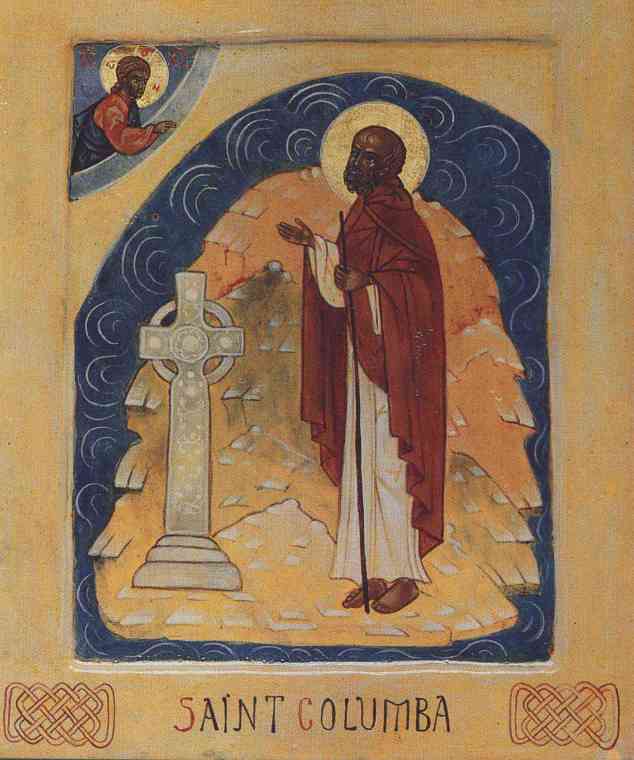
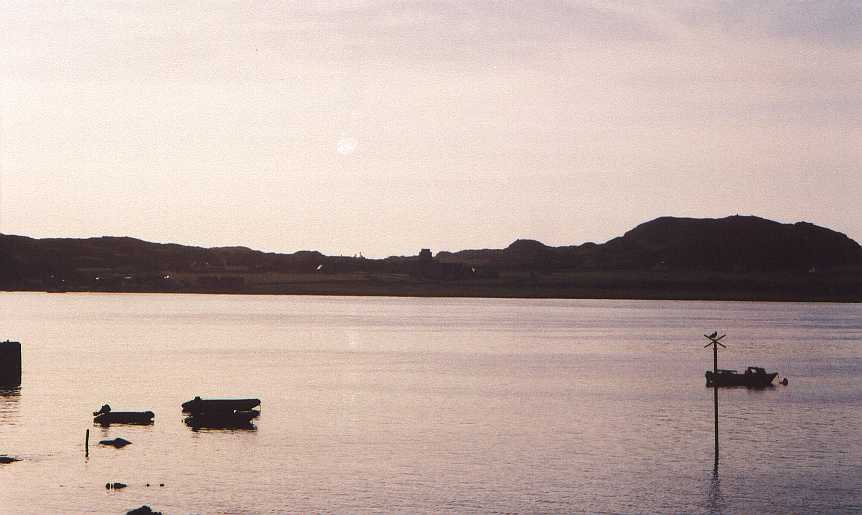
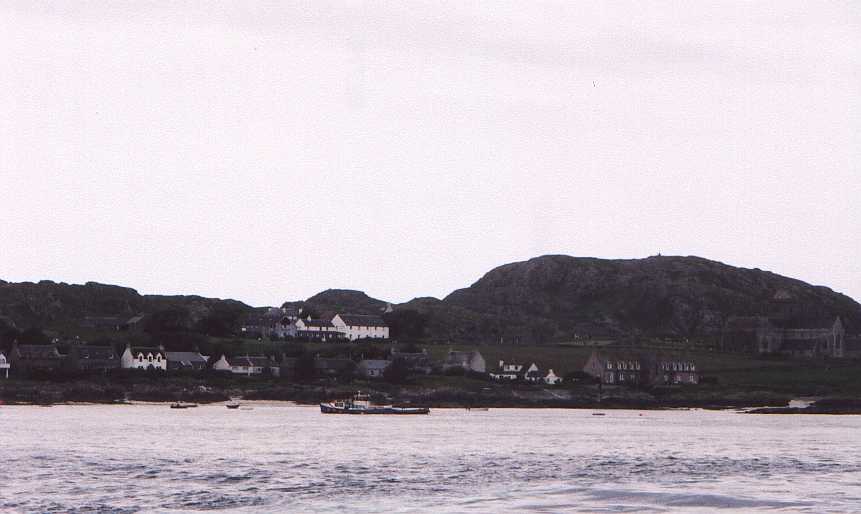
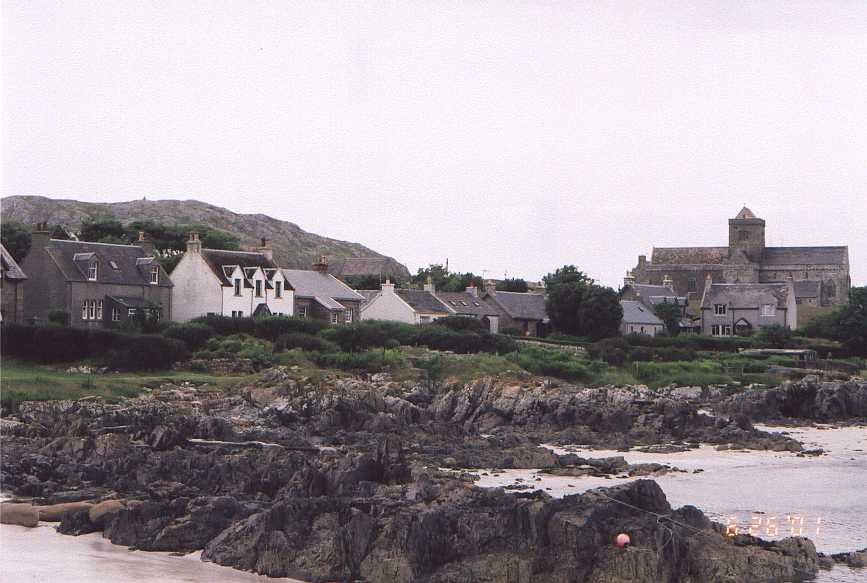
I now sit near the shore, looking across at Iona. I can see a small village, the rebuilt abbey, and some other buildings. To think that St. Columba walked over there, just within this view, makes me feel a sort of stillness. He's over there still, I am sure, in one way or another, praying for those who visit his island, this tiny island whose patron was called both Wolf and Dove. |
|
|
I wish I could run like St. Peter across the water and begin praying and chanting there right now -- but it will have to wait until the ferry sets out tomorrow morning. |
|
|
It still doesn't seem real: tomorrow morning I will set foot on Iona. But it is real! There is is! O Christ God, You are more wondrous day by day. Thank you, Lord. |
|
|
27 June 2001, 7:45am Yesterday morning, I arose and did my morning ablutions and prayers. After a tasty British Breakfast, I set out for the ferry to Iona. Soon the ferry landed on the eastern shore in Martyrs Bay, where many monks were once slaughtered by Norse invaders in A.D. 806. I set foot onto the holy island. |
|
|
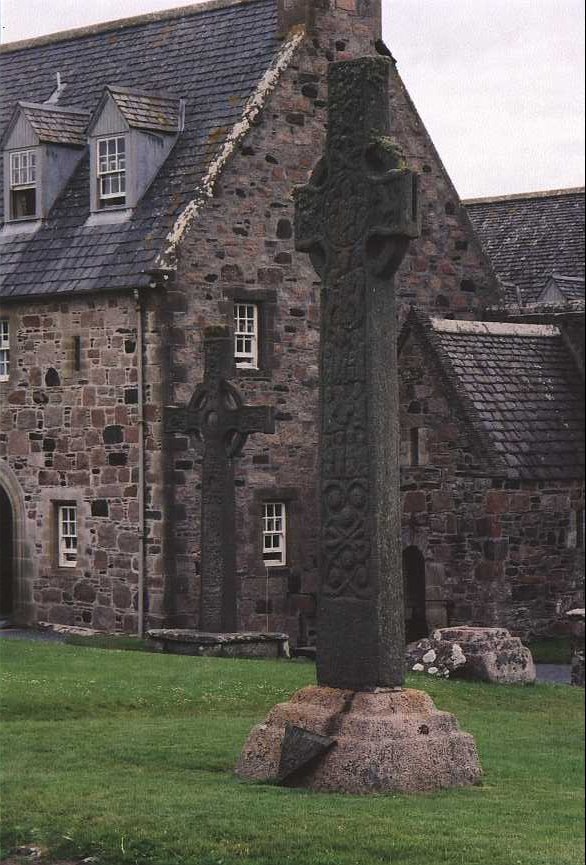
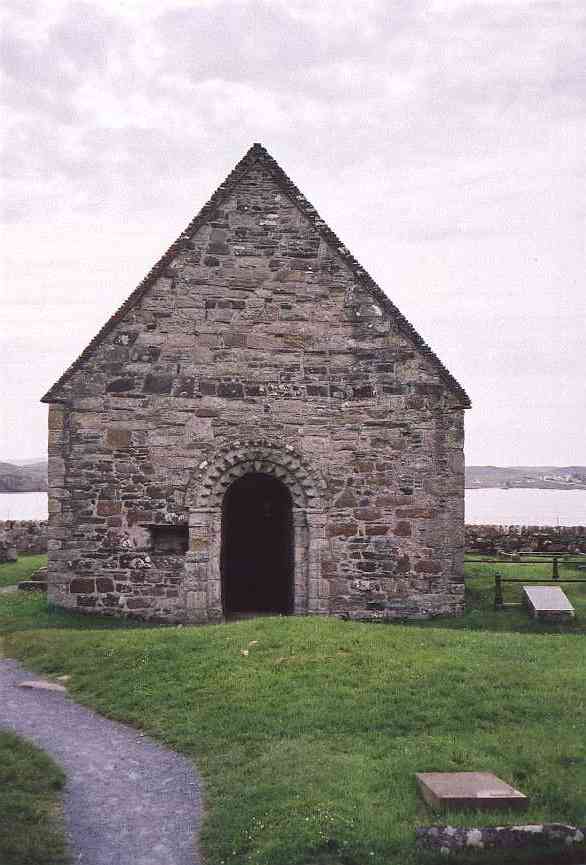
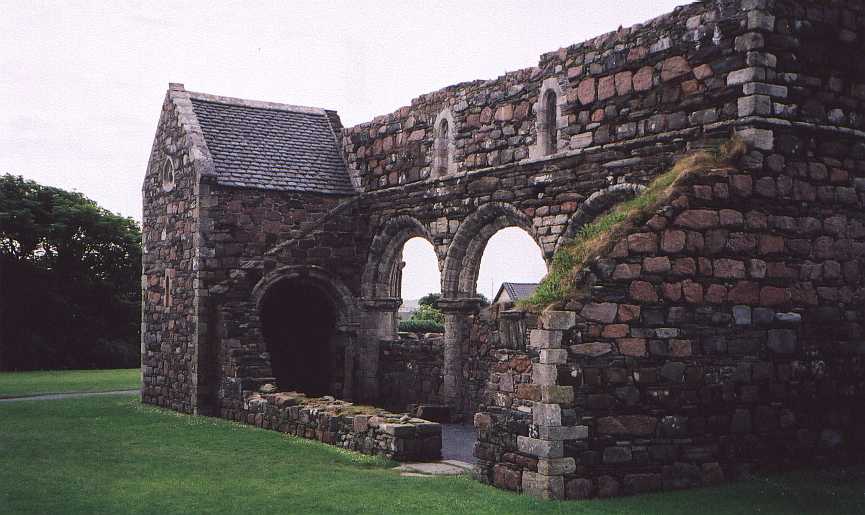
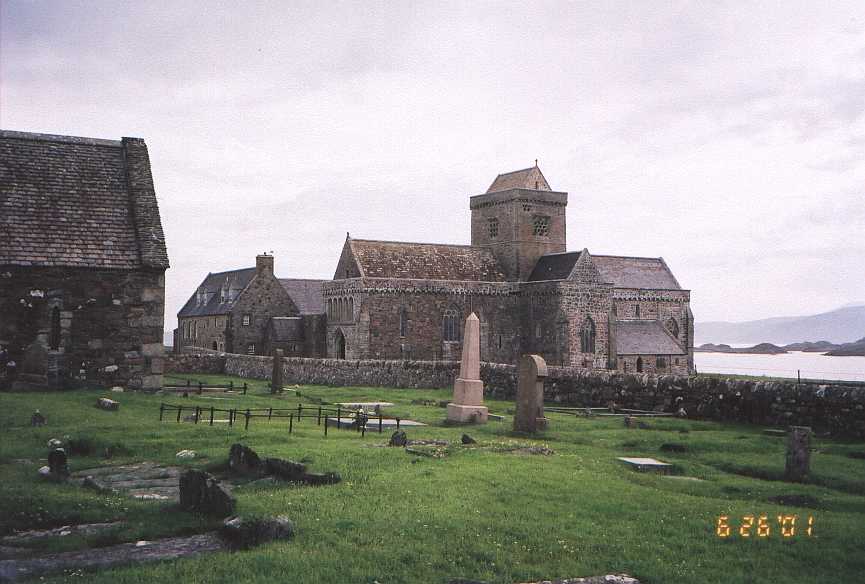
I immediately saw the ruins of the old nunnery nearby to the north and slightly west, so I went there first. I then followed the road to the abbey, looking around there at the buildings and environs -- the nave, the cloister, St. Oran's Chapel, the graveyard (where Duncan and MacBeth are said to be buried), St. Columba's Cell, and the high crosses of Ss. Martin and John.
|
|
|
From the abbey I set out north along the road to the end of the island. I reached the beaches, the site of another Viking slaughter in A.D. 986 on Christmas Eve. As I walked around to the northwest side of the island, I could see Dun I towering above me the whole time, the highest hill on Iona at 332 feet above sea level. I resolved to climb it. Walking a bit above the western beach on the north end, I looked for the easiest place to begin the ascent up the rocky hill. As I made my way through the grass-and-sand landscape, I noticed something fascinating -- rabbits! Most of the island has sheep everywhere and a few cattle, but here were dozens of bunnies rabbitting in and out of burrows and through the grass. I couldn't help but laugh a little and smile. I then began ascending Dun I. It wasn't too bad at first, but soon it began to present quite a challenge. I had to rest several times, but I finally reached the summit. I rested there for a bit, then stood and turned toward the east and offered up midday prayers. A few minutes after I finished chanting, some other people arrived, so I left them to be alone. Descending on the southeast side of the hill, I wished that I had come up this way, because it was clearly much easier! It would not be my last workout for the day, though. |
|
|
I reached the road again and passed the high cross which the Duke of Argyll raised in honor of his wife in 1878. I then made good time back to the village to find something to eat. I picked up some food at a small shop, then took the main road on the east side south. I stopped along the beach and ate lunch. |
|
|
I rose feeling refreshed, and I continued on the road south, which eventually turned off to the west. Following westward, I passed the crossroads and went on toward the Machair, the common grazing area on Iona. Before going through the gate to the Machair, I climbed up a small knoll to the left. There, on the Hill of Angels, St. Columba once stood praying and was suddenly surrounded by flocks of the holy angels, who stood conversing with him for a while, as St. Adomnan (a later abbot of Iona) records. I there sat down and gathered a little earth to take with me. |
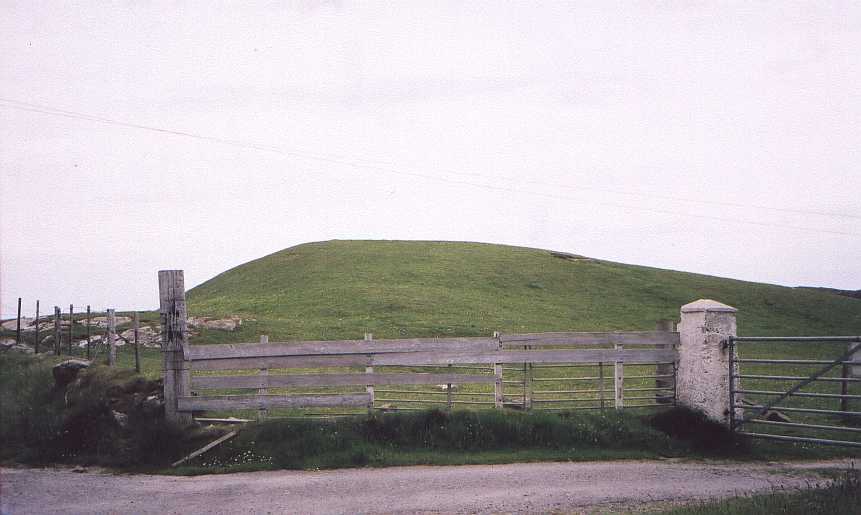
|
|
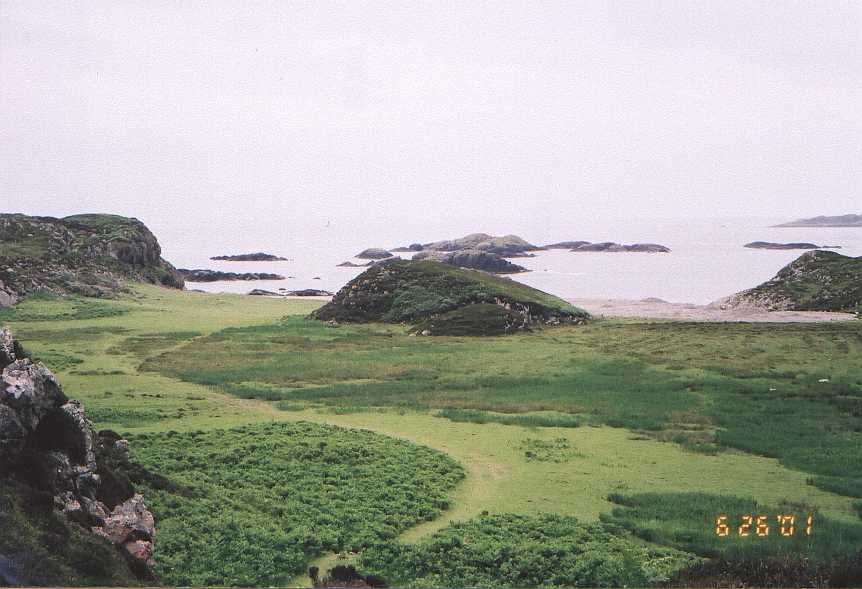
I then continued into the Machair and along the western beach, heading south. I veered a little to the east, passing by Loch Staonig, a small freshwater pond once used as a source for drinking water. I followed the path further south-southeast and then came to St. Columba's Bay, also called Port a' Churaich (Harbor of the Coracle), the site where St. Columba arrived from Ireland on the Sunday of Pentecost in A.D. 563. The hill on the west side of the bay is the Hill of the Back to Ireland, because there the monks clambered up to see if they could see Ireland. It was part of the conditions of the saint's exile that he no longer be able to see his homeland from wherever he settled, and it turned out that Iona satisfied this requirement. I took two pebbles from the bay, one for Ian Wilson and one for myself. I then turned northeast. |
|
|
Passing by the old marble quarry, I decided to go north along the east edge of the island back toward the village at Martyrs Bay. I came to rue that decision, because it was an extremely grueling walk, at least for someone such as myself who is not very fit. With much effort, however, I made it up and down the hills and rocks back to the ferry. As I looked from the ferry back to Iona, a longing filled me for the place. I also had a wish that a monastery of the Orthodox Christian faith could be established there -- the present community is "ecumenical." I do pray that God should bring me back to Iona. I then went and settled my bill at Abbey View and boarded the bus to Craignure on the east side of Mull. (A note to those who make this trip: On the way to Fionnphort, sit on the right side of the bus, and on the way back to Craignure sit on the left. You'll have the best view of the amazing scenery.) Arriving in Craignure, I boarded the ferry back to Oban on the mainland. |
|
|
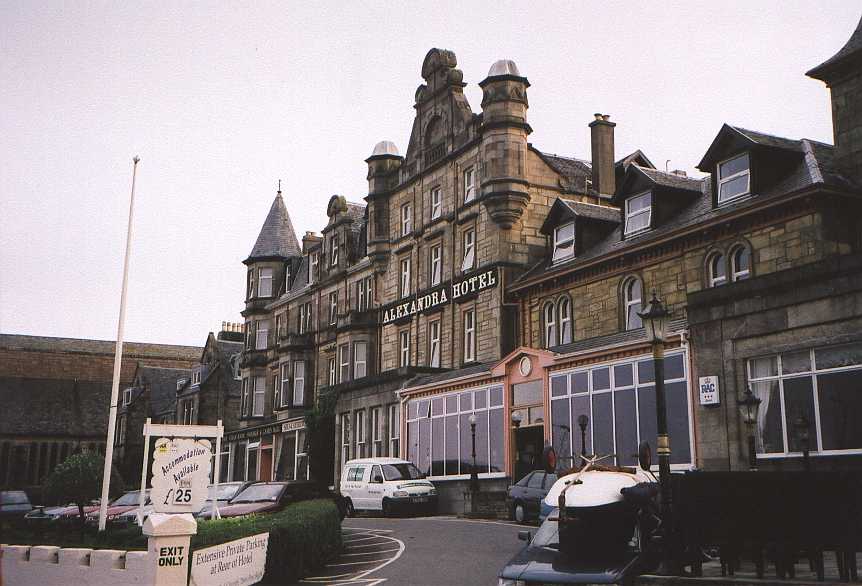
Landing in Oban, I found a hotel, the Alexandra Hotel, right next to the Catholic St. Columba's Cathedral. The hotel, like many of the other buildings in town, is Scottish Victorian in architecture, a very twisted and illogical configuration of walls and turrets. For dinner at the hotel, my meal included haggis. It was my first time eating it, and I liked it! I rested fairly well that night. |
|
|
This morning, I rose and washed and prayed, also having a little coffee and making some small sewing repairs to my backpack. I gathered up my luggage and went downstairs to check out. To my dismay, I saw signs in the office which the night before had evaded my attention. They stated that I should have settled my bill the night before, since I was leaving early. Just as I was about to leave a note asking the hotel to charge everything to my credit card, the night porter came in and told me that he could take care of my bill, and then he offered me breakfast, which also wouldn't normally have been available at that hour, either. Once again, glory is due to God Who always provides for His children. I am now nearly in Glasgow. I recommend to those taking the train between Glasgow and Oban to sit on the left toward Oban and on the right back to Glasgow. In this way, you will have a clear view of Kilchurn Castle at Loch Awe. |
|
|
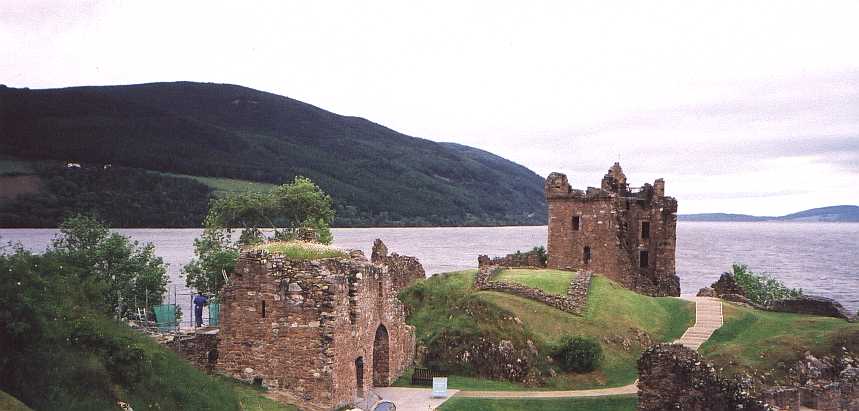
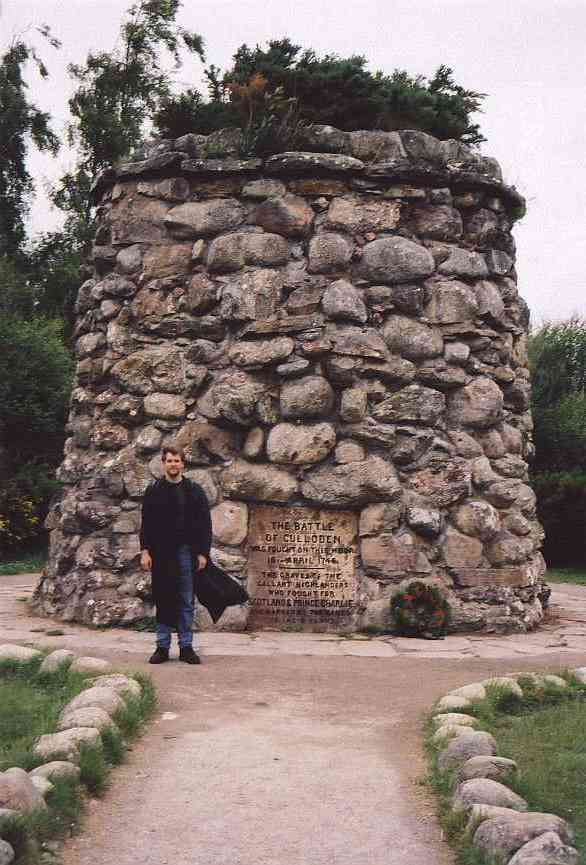
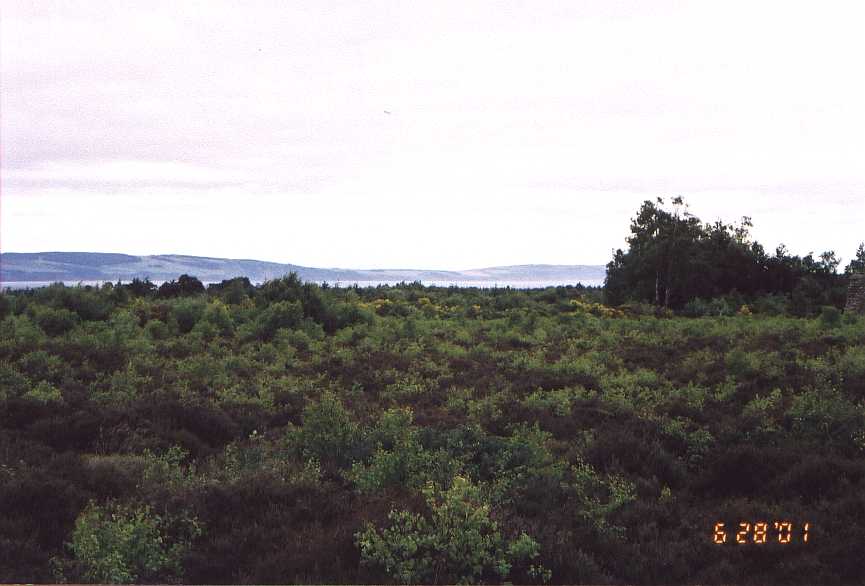
29 June 2001, 1:15pm I arrived in the early evening in Inverness and met Dr. Nick Needham, my friend there. He turned out to be an interesting chap, and we had no end of topics to discuss while I was there. The next morning, on Thursday, we set out to Loch Ness. There, we toured a small exhibition dedicated to a look at the local "monster," and then we walked to nearby Urquhart Castle on the loch, the site which may well have been where St. Columba preached to King Brude of the Picts. After the castle, we caught a cab to Culloden Battlefield, where in 1746 Bonnie Prince Charlie led a failed attempt by Scottish Catholics to capture the British crown. With the army's defeat, it also was the end of the Highland clan system and culture. Culloden Moor is dark, cold and bleak, and I can imagine that the Highlanders' usual fierce charge would have been considerably slowed by the bog and thick underbrush. We then made our way back to Dingwall, the nearby village where Nick lives. We continued chatting the whole time quite amicably. This morning, I boarded the train for Edinburgh, and so now here I am. |
|
|
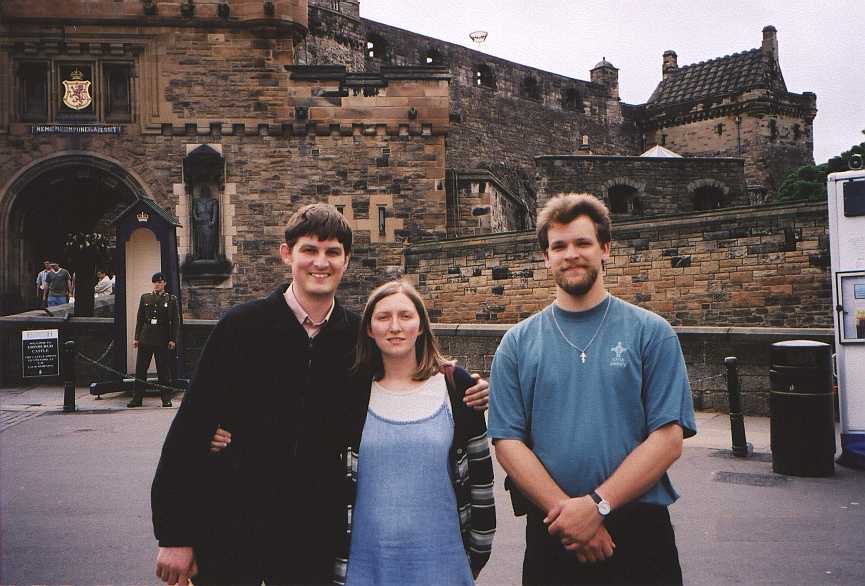
2 July 2001, 9:30am On Friday evening, I arrived in Edinburgh and met my friend there, Russell Phillips. We walked around Edinburgh for a bit, and he showed me where the Greek parish was that I would attend on Sunday. We went back to his flat and met his wife Oksana, a native of Siberia, and then we had a lovely dinner and retired.
|
|
|
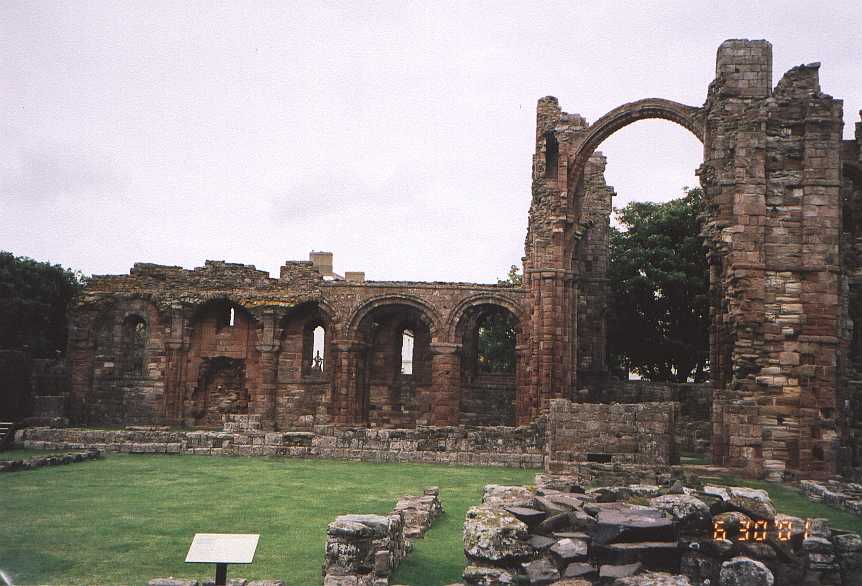
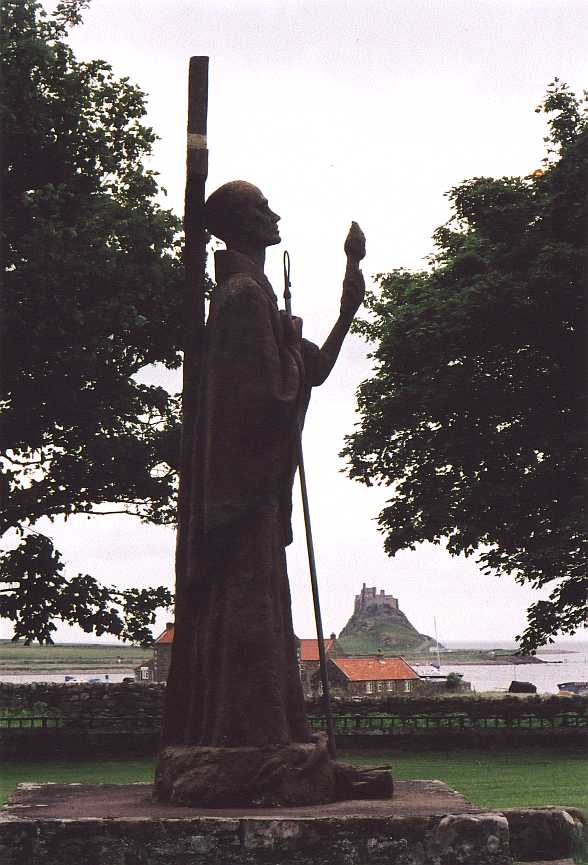
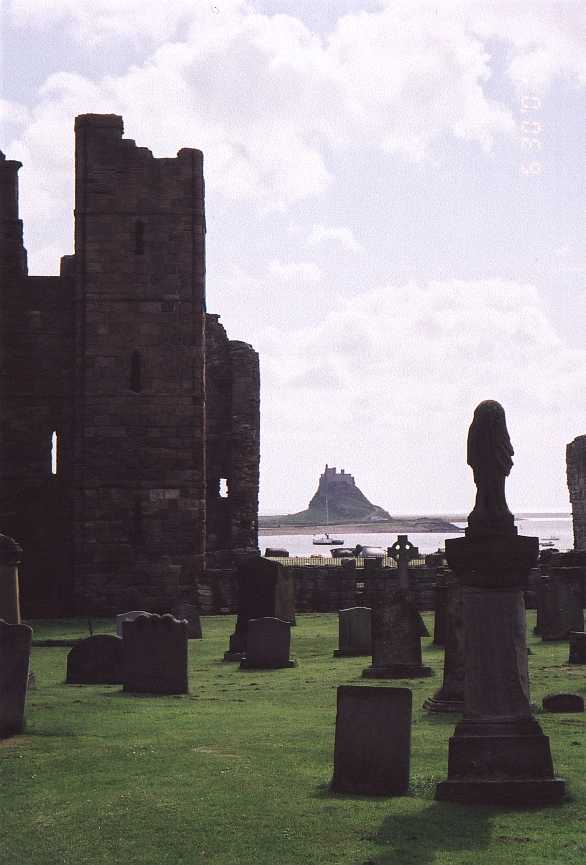
The next morning, I boarded the train for Berwick-upon-Tweed, stopped
there, then caught a taxi to Lindisfarne, or Holy Island as most of the
locals call it. I looked there at the priory, the castle, some
exhibitions and much of the surrounding countryside.
From this tidal island, cut off by the water from the mainland for a few hours twice a day, St. Aidan, a monk from Iona, evangelized Northumbria, what is now known as northern England. The island has seen many saints, but the two most famous are Ss. Aidan and Cuthbert. One can feel the thinness of the place here, as well, though the sense of it was not as intense for me as on Iona.
|
|
|
I returned back to Edinburgh in the evening and had dinner with Russell and Oksana. The next morning, Sunday, I took the bus downtown and walked to St. Andrew's, the Greek parish, and worshipped there with them. I wasn't able to escape serving there, either, much to my delight, when one of the presvyteras asked me to read the Prayers of Thanksgiving at the end of the Divine Liturgy. Afterwards, I met the two priests, Frs. John and Columba, and several parishioners, then Presvytera Elizabeth, Fr. Columba's wife, gave me a lift back to the flat. The Phillipses and I then had lunch and afterwards strolled about downtown Edinburgh, looking at churches and at the castle. They then went on to their own church while I returned to the flat for some reading. After, we had dinner and retired for the night. This morning, I boarded the train for Liverpool, where I will catch a plane for Belfast. I very much liked staying with Russell and Oksana, probably at least partly because they're the first people in Britain of my own age with whom I have spent a goodly amount of time. I've liked the older folks, too, however. The Phillipses are lovely people in their own right, though, no matter their age. Now, perhaps, I'll try to rest a little. |
Previous: L O N D O N
Next: I R E L A N D & N O R T H E R N E N G L A N D